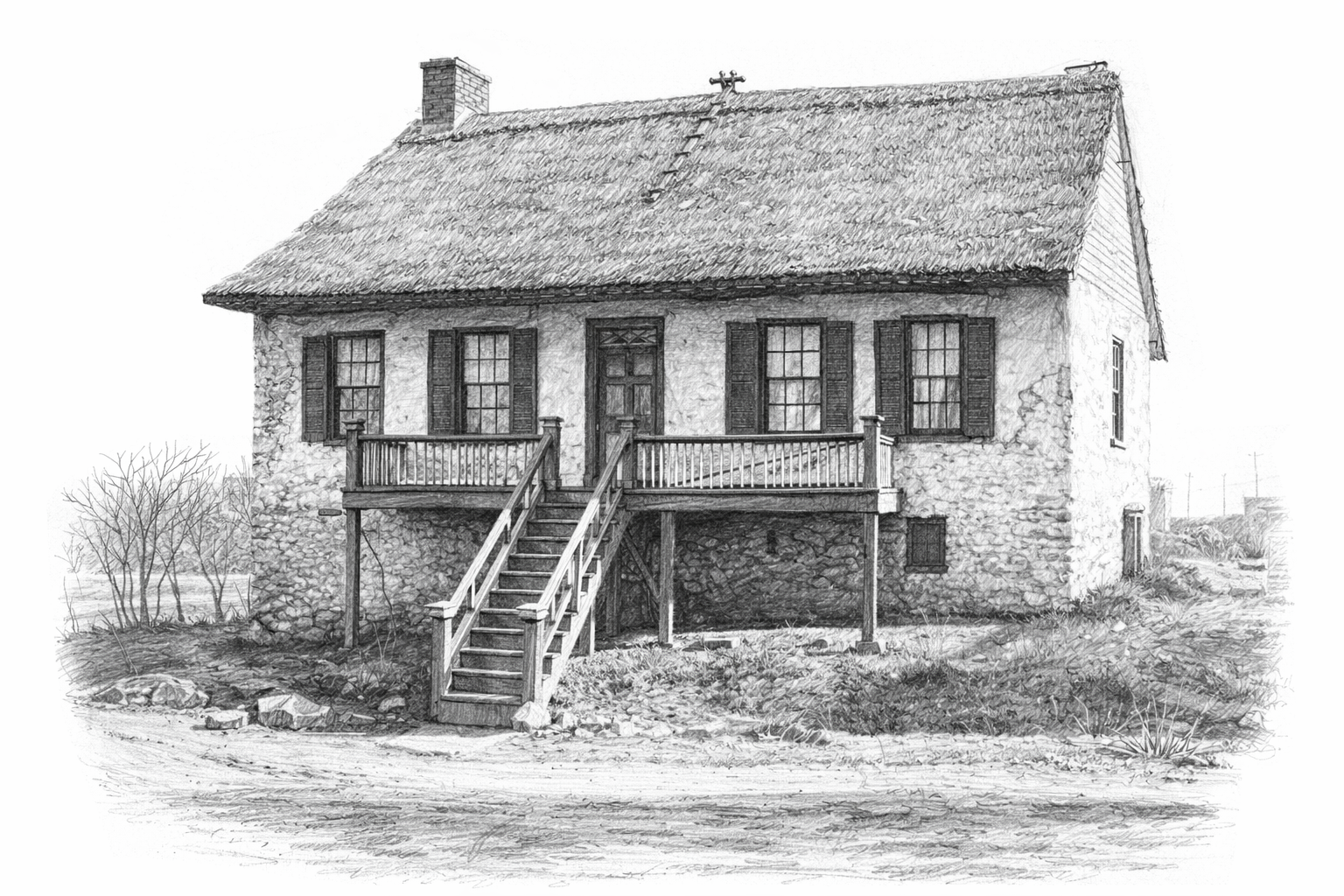
Joost Duryea was born in Santes, France in 1645. He was ethnically a Walloon and religiously a Huguenot. On a good day, that would severely restrict your rights, limit your access to employment and force your conversion on pain of imprisonment. On a bad day, you just got burned at the stake.
Unsurprisingly, he escaped to Germany as a teenager and married in Mannheim in 1672. His wife, Magdalena Antoine LeFebre, was a French Huguenot, born in Soissons in 1651, who likewise fled Catholic France. After 3 years, they emigrated to New York, with their 2 young children.
The colony formerly known as New Amsterdam had just become English again the year before – having changed hands 5x in 50 years. Consequently, place names, currency, property ownership, and applicable law were in still flux, and had been for some time.
They initially settled in New Utrecht, now a part of Brooklyn, but they sold that farm in 1681 to Garret Cornelisen Van Duyn for “3200 Guilders and a new wagon”. At the time, a skilled labourer would earn 1 to 2 Guilders a day, so this was a fortune, and they used that money to snap up a lot of property between Newtown and Bushwick. The 2 settlements were 20 years into a border war – so land was going cheap.
The land for Newtown had been purchased from the Canarsie Lenape by the English in 1656. But five years later, Pieter Stuyvesant, the Dutch Director-General of New Netherlands, felt no need to honor the title. He gave 1200 acres of that same land to Bushwick, a Dutch colony of French Huguenots, and the border war began.
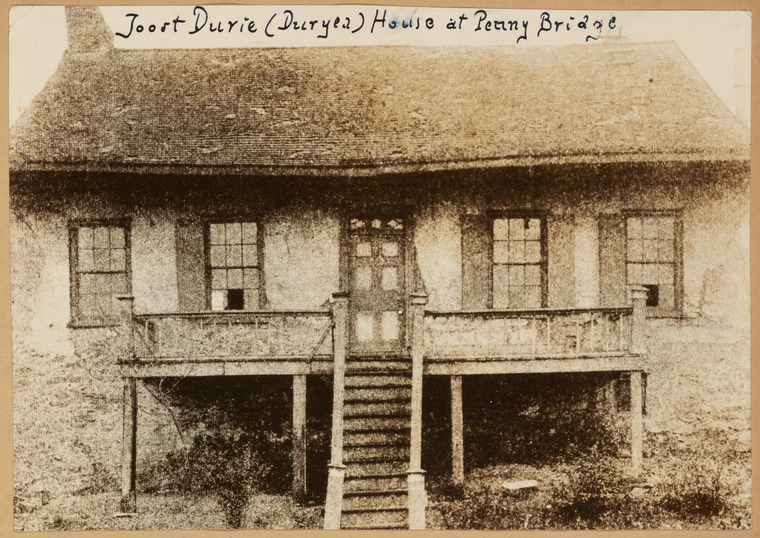
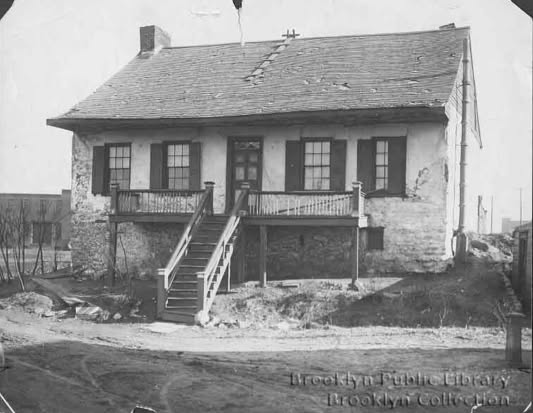
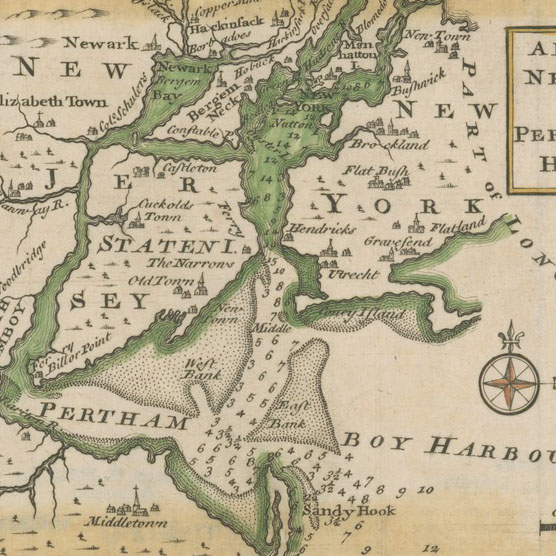
Joost – being neither English, nor Dutch, nor even really French – was maybe the perfect guy to live in a no man’s land. The dispute wasn’t settled until 1769, long after he was gone.
The Duryea house was near the foot of present day Meeker Avenue on the banks of Newtown Creek, then called Mespat Kill, after the Mespeatoches, Lenape. The “Duryea House” was built in 1681 and destroyed in 1921. There is some question as to whether or not Joost built the house himself, or got it from a man named Clay, but it was certainly there in his time and it was certainly owned by his son and many generations after.
I genetically confirmed my descent from my 9th great-grandparents, Joost Duryea & Magdalena Antoine LeFevre, thanks to 9th cousins 1x removed.