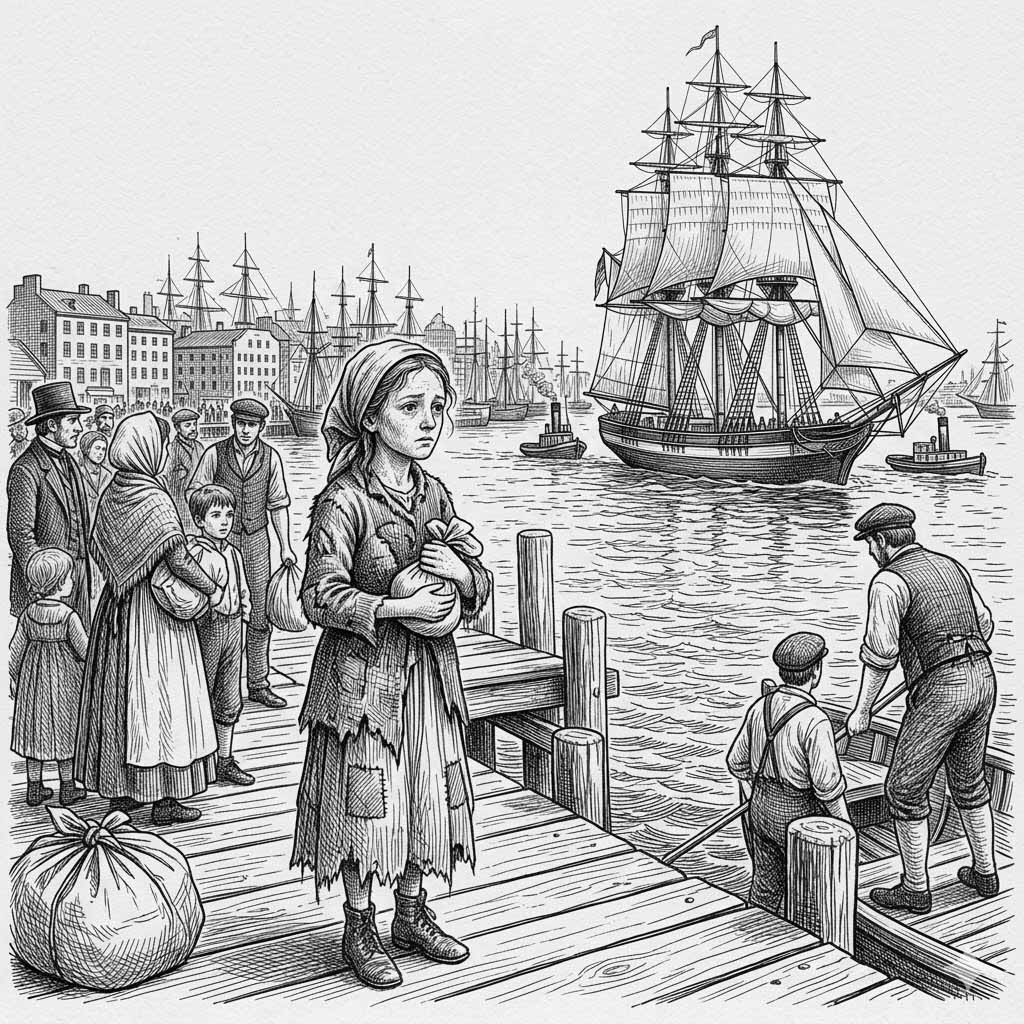
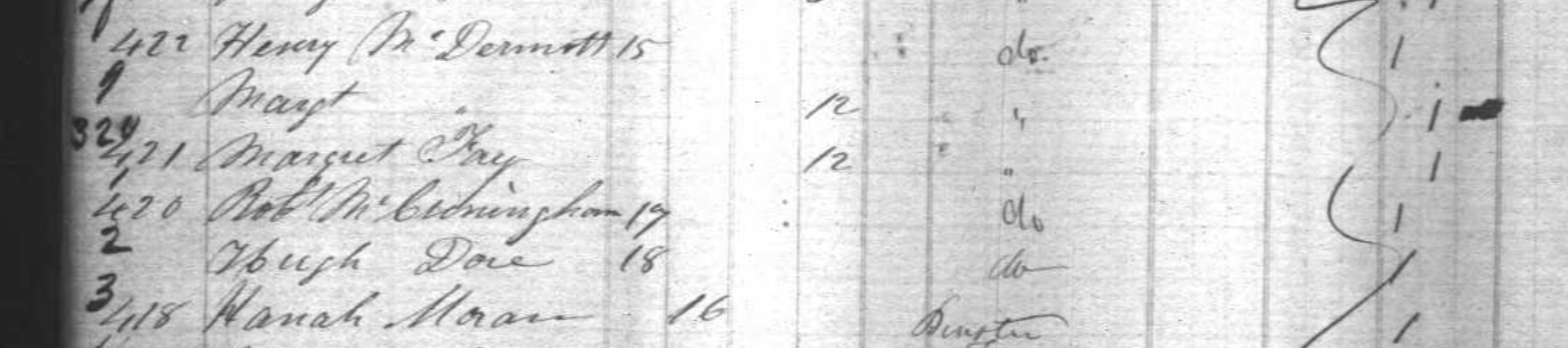
My second great-grandmother, Margaret Fahy, was an Irish famine emigrant. She crossed the Atlantic, at the age of 12, with 37 other unaccompanied Irish children. She was listed as a ‘labourer’ on the manifest and when the S.S. Ellen Marie docked in New York City on 10 OCT 1850, they were all left to fend for themselves.
For years, this was the first record I had of her. None of the documents she left behind named her parents, or her hometown in Ireland. It was as if her life began on the dock that day – but of course, it didn’t.
Finding Timothy & Catherine Fahy
I tested my DNA, and was matched to people who shared DNA with me. Some of these people also shared DNA with each other – meaning, we share common ancestors. By tracing the families of those matches, I found our common ancestors by name. In this case, 9 people I never met helped me find Margaret’s family. Margaret didn’t leave records, but they did.
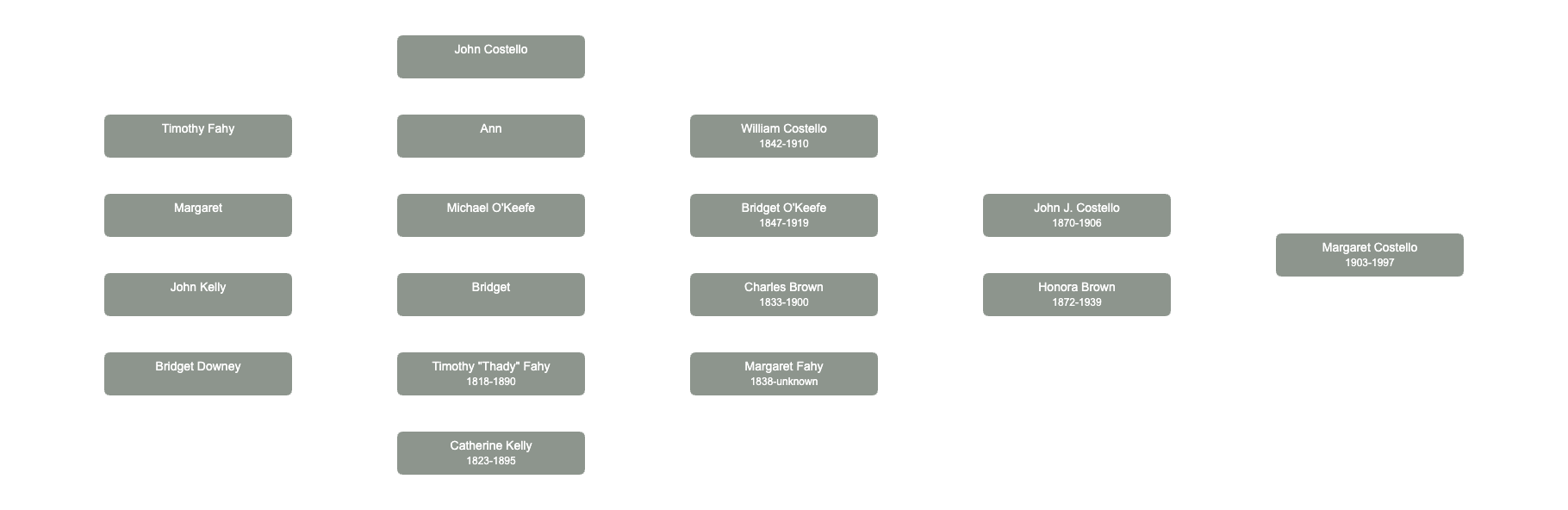
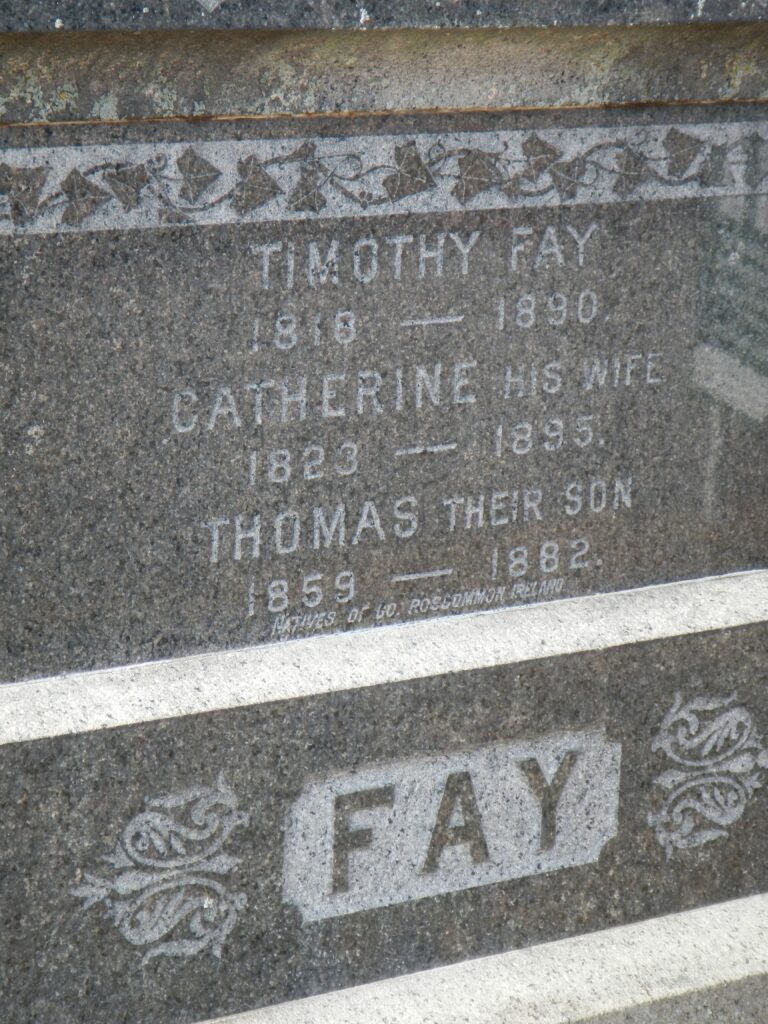
All 10 of us descend from Catherine Kelly & Timothy Fahy of Taghmaconnell, County Roscommon. They are Margaret’s parents, and my 3rd great grandparents. They had 9 children – including Margaret – and their parents were John Kelly & Bridget Downey and Timothy & Margaret Fahy.
It would be fair to say that Catherine & Timothy had 2 lives – one before the Great Famine, and one after. They went into the famine with 3 children, and lost 2 of them before it was over.
My 2nd great-grandmother, Margaret, was their eldest, born in 1838. Patrick was born in 1842 and baptized in Taghmaconnell. In the thick of the famine – 1848 – Timothy Jr was born. He would be the last sibling Margaret ever had the chance to meet.
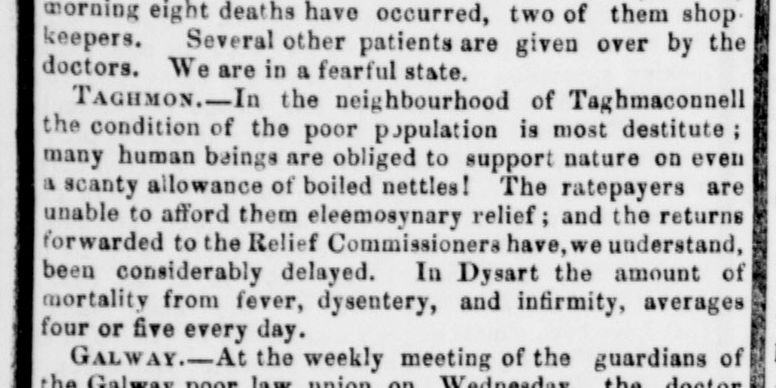
In the neighborhood of Taghmaconnell the condition of the poor population is most destitute; many human beings are obliged to support on even a scanty allowance of boiled nettles
Evening Freeman, 03 Jun 1847
The Famine in Roscommon
At the start of the famine, 80% of people in Roscommon were on plots of land too small to sustain a family on anything other than a pure potato diet. Potatoes grew well in bad soil, took nothing to cultivate, and yielded 4.5x more calories per acre than oats or rye. Most people subsisted on potatoes and when the crop blighted, they starved.
- In 1845, a third of the potato harvest was blighted.
- In 1846, the entire crop was blighted. A publicly funded works project was tried and failed because the needy were asked to work off more calories than they were given.
- In 1847, starvation was at its peak, and compounded by epidemics of typhus and fever. The British government opened soup kitchens – and they helped – but they were shut down within 6 months. Parliament felt the “Irish problem” should be funded by Irish property owners through local taxes.
- In 1848, Irish property owners avoided the new taxes by evicting their starving tenants, sometimes forcibly, and sometimes by offering families collective passage on “coffin ships”. 10-50% died in transit, depending on the route.
Some counties were hit harder than others, but Roscommon fared worse than most. It lost 16% of it’s population to famine, and 15% to emigration. Mass evictions were so pervasive, the population is now 74% smaller than it was pre-famine.
Losing Margaret & Patrick Fahy
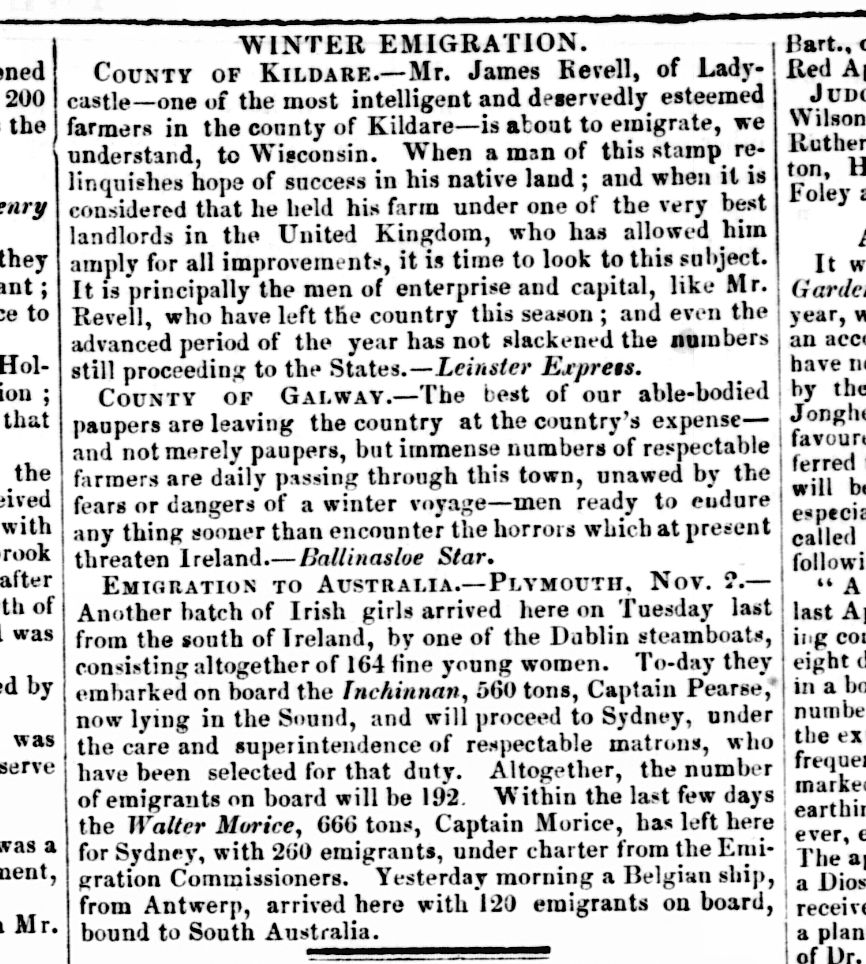
Margaret’s family didn’t emigrate collectively and she didn’t sail on a “coffin ship”. She took a safer class of boat, sailing from Liverpool. That suggests she was part of a workhouse sponsored emigration, most likely from the Ballinasloe Union Workhouse.
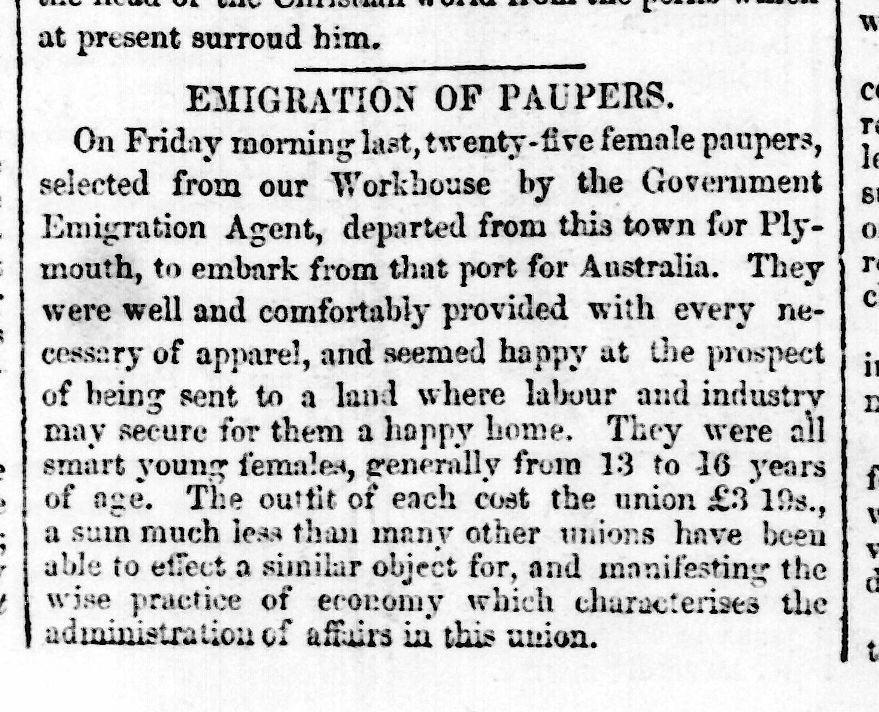
By 1848, workhouses were completely overwhelmed and began sponsoring emigration schemes, specifically targeting orphans and girls. It was cheaper to buy a one-way ticket than to feed a child indefinitely at the workhouse.
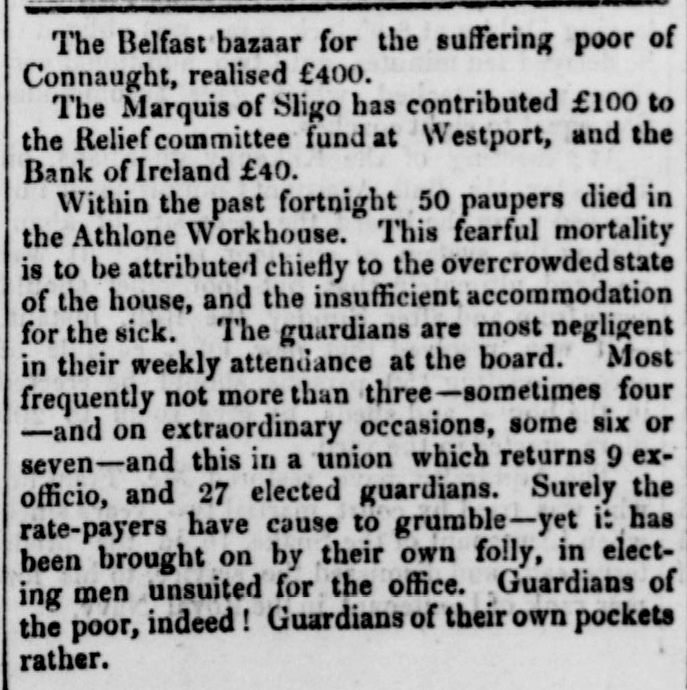
By 1850, a workhouse system intended to accommodate 94k people, was packed with 264k. In the face of that pressure, funding the exit of unmarried teenagers, particularly girls, had become standard institutional practice across Ireland.
Parents brought their children to the workhouse to keep them from starving, but it cost them dearly. They were allowed nearly no contact with their children, who became wards of the Poor Law Board of Guardians, and they could be emigrated without parental consent.
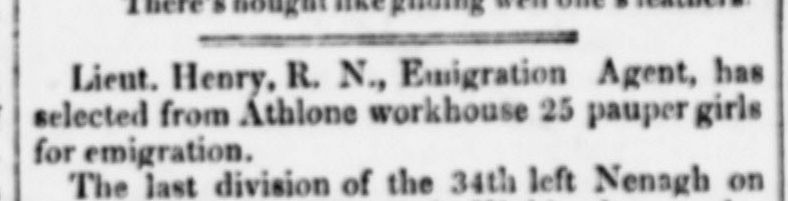
Lieut., Henry R. N. Emigration Agent, has selected from the Athlone workhouse 25 pauper girls for emigration.
Waterford Mail, 18 NOV 1848
Families were separated by age and sex inside the workhouse – but that was not strictly enforced with infants until the age of 2 – and that may be why Catherine & Timothy were able to hang onto their toddler, Timothy, Jr.
Given how systematically they were targeting girls for emigration, it’s no suprise that Margaret was emigrated, but Patrick is more of a puzzle. There is no record of his death, but if he died during the famine, there wouldn’t likely be one. He would be buried in a mass paupers’ grave. It’s seems likely that he was emigrated to Australia – there was a man in New South Wales from Roscommon whose details closely match our Patrick.


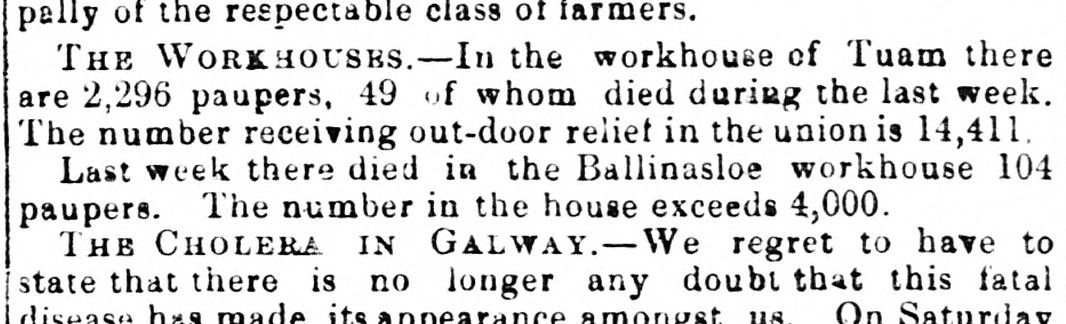
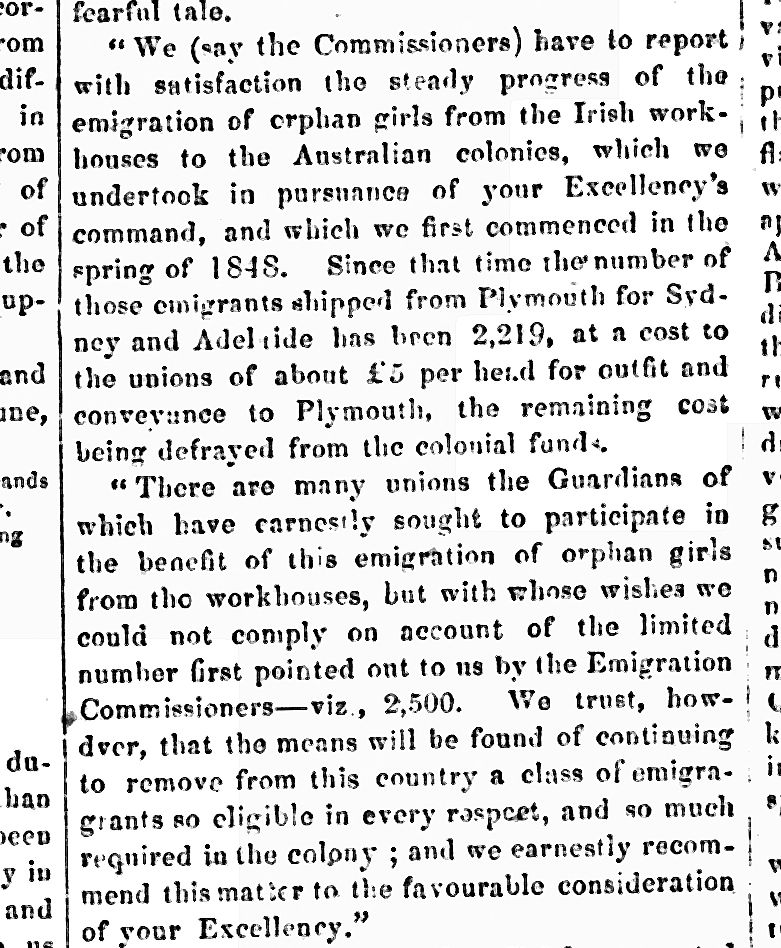
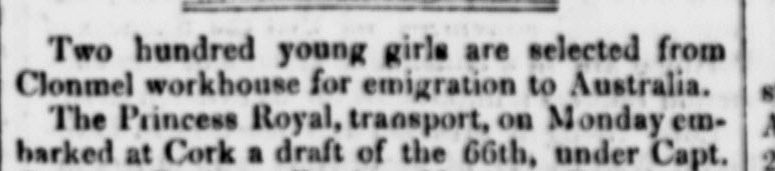
This is certain… Catherine & Timothy believed they would never see Margaret and Patrick again. It was common practice at the time to reuse the name of a dead child on a later child, and Catherine & Timothy named 2 of their “post-famine” children after Margaret and Patrick.
- Margaret (1838)
- Patrick (1842)
- Timothy, Jr (1848)
- Margaret (1851)
- Patrick (1854)
- Catherine (1856)
- Bridget (1857)
- Annie (1864)
- Lawrence (1865)
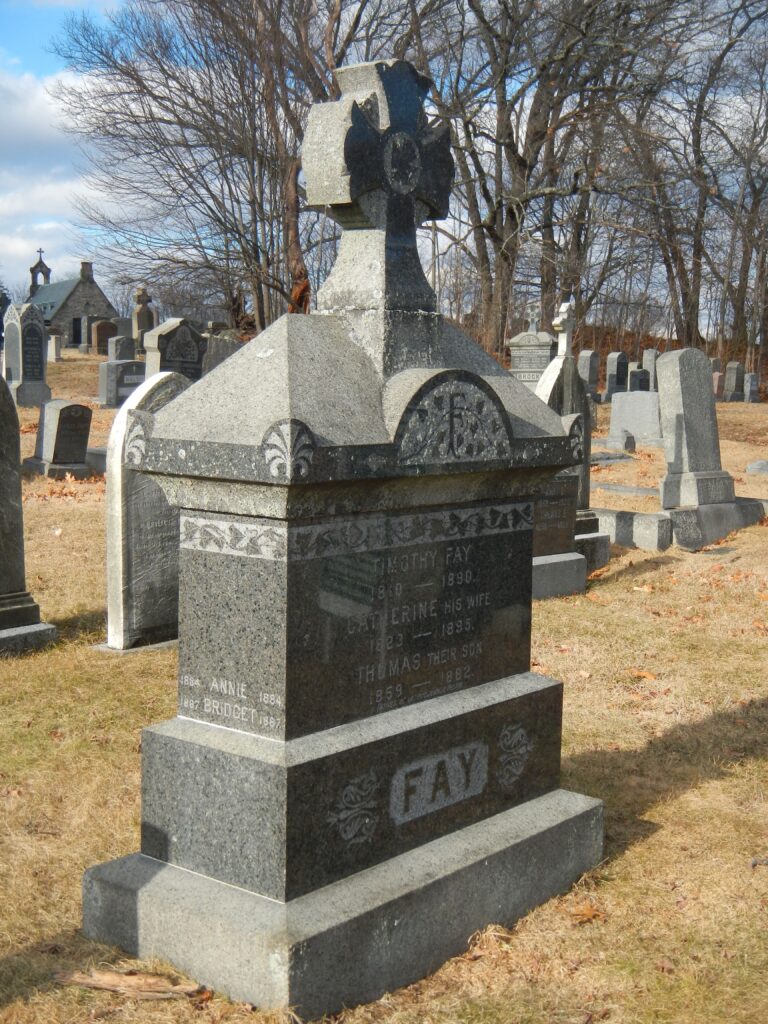
I don’t know where Margaret’s family landed just after the famine but by the 1860’s, they were migrating to Boston. Her parents and her 7 siblings lived and died near each other in Suffolk County, MA.
Margaret was 4 hours away by train from her entire family, probably without knowing it – and there was no one left to write to in Taghmaconnell.
After the docks…
In 1845, the population of New York City was 371,223. In the 5 years that followed, the port of New York processed over 600,000 Irish refugees. In 1850, the year Margaret arrived, there were over 15,000 homeless, vagrant, or orphaned Irish children roaming the streets of New York City.
In response to that pressure, the ‘Orphan Trains’ began. It can best be described as ‘forced labor’ dressed up as ‘social services.’ Homeless children were rounded up and shipped out west by train. At station after station, they were set out on blocks for inspection, until someone decided to take them. They were legally indentured to a master who had control of them until they reached majority. They couldn’t leave the property, marry, or seek alternative employment. Running away was a statutory crime and the police would return them to their master. Over 200,000 children were indentured in this way between 1854-1929.
Somehow Margaret escaped the ‘Orphan Trains’ and ended up in Newark, NJ. How? I don’t know, I wish I did. For eighteen years, Margaret vanishes from the record. Young unmarried Irish women were, statistically, likely to be working in domestic service. The fact that she didn’t marry until she was 30 years old supports that likelihood.
On Christmas Day, in 1868, Margaret married a Danish refugee named Charlie Brown at St. John’s Roman Catholic Church in Newark, NJ. His homeland had been lost to Prussia 4 years before. Rather than capitulate, he left. He was 36.
In spite of the late start, they had 7 children together. They’d seen the worst of the world, and I’d like to think they found peace in each other. She died at the age of 59 and is buried at Holy Sepulcher Cemetery in East Orange, NJ. Charlie died 3 years later, and is buried beside her.
The famine began when Margaret was 7. She watched countless people starve. She saw countless people die. She was abandoned as a child in a foreign country. The fact that she survived to adulthood, and built her own family, is both a miracle and a testament to her resilience – whether I know the whole story, or not.